
Why should the Zendesk specialist even exist?

If you need help with Zendesk you can find every flavour of specialist out there, from admins to architects. There are partnership companies, agencies, individual contractors and full time employees, all under the banner of “expert” to help you manage your instance.
But the Zendesk specialist is a role that exists primarily because the tool is awkward, not because the work is inherently specialist.
Well, how did we get here?
Zendesk’s admin panel was clearly built by separate teams who never spoke to each other. Triggers live here, automations there, views somewhere else, ticket fields in a third place, and each with a different URL pattern. There’s no cross-referencing, no dependency view, no diffing, no dry runs. Every change is a leap of faith.
The specialist emerged as a human workaround for an interface that refuses to help you. They learned the admin panel by heart, made and fixed mistakes over and over, and memorised all its quirks so you didn’t have to.
Once the role existed, the platform had no incentive to fix the mess. The specialists became an integral part of the ecosystem that continues to prop it up.
What the job advert says vs. what the job actually is
When a company hires a Zendesk specialist the job advert will say:
- Designing routing logic that matches how the business actually works
- Reviewing macro usage against agent behaviour
- Shaping SLAs around customer commitments
- Auditing whether the support process still matches the product
- Things that require understanding the company, not the software
All things that require a skilled human to do.
Instead, what the specialist actually ends up doing is:
- Remembering which of twelve pages contains the setting you need
- Keeping a mental map of which triggers reference which groups, because nothing else will tell you
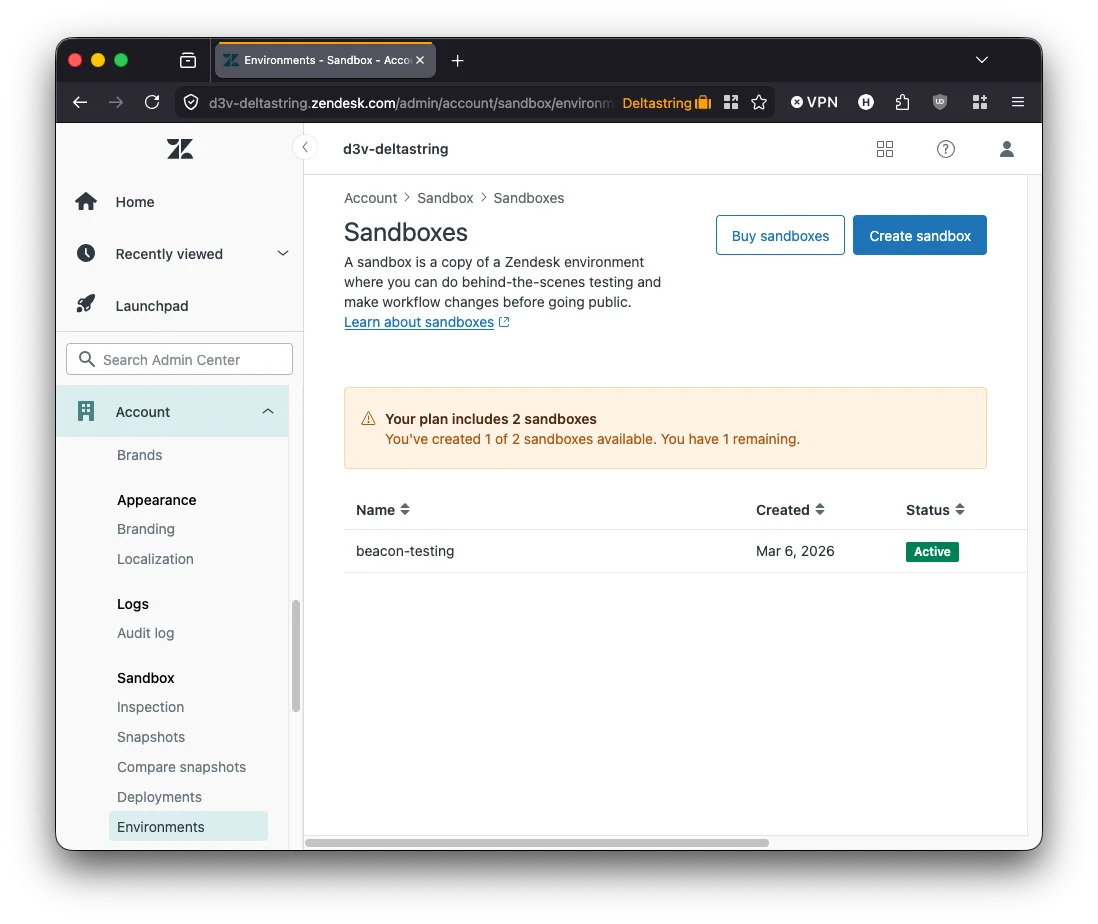
- Copy-pasting config between sandbox and production by hand
- Combing through individual tickets to discover what the issues actually are
- Finding out a change broke something three weeks later, when a customer complains
- Writing internal docs that duplicate information the platform already has but refuses to expose
So much time is wasted going back and forth, and what you’re really paying for is a salary for someone whose main skill is navigating a bad UI. All the knowledge lives in their head because the tool won’t surface it.
The knock-on effects
CX operations decisions get bottlenecked on whoever holds the platform knowledge. Business logic and platform trivia get tangled together, so nobody else dares touch config in case something breaks.
It’s a career trap for the specialist too. Your skills are in Zendesk oddities, not transferable CX thinking.
Every Zendesk admin thinks their instance is uniquely bad. It isn’t. The platform is genuinely like this for everyone, and the frustration is proportional to the scale of the instance. A 200-agent environment with three brands is almost unmanageable by hand.
What good tooling should do
Good tools encode the platform’s quirks so humans can focus on the business. The information is all there — which triggers reference which groups, what a change will break, whether sandbox and production have diverged. Zendesk knows all of it and refuses to surface any of it. The specialist is just the human layer that reads what the database already knows.
A proper tool would cut out the middle step. The specialist role, where it survives, should be a senior CX operations job that uses better tooling, not a human compensating for missing features.
Zendesk configuration management shouldn’t require a degree. The goal isn’t to eliminate the expert, it’s to free them up to do the work that actually needed a human in the first place.
We all know that the Zendesk admin panel isn’t good enough. We built the one we always wanted because we got tired of spending our time navigating quirks instead of fixing issues. If you are too, go to deltastring.com/beacon/ and discover how easy Zendesk can be when all the guesswork is removed.